Tectum Replacement Guide – Tectum I Planks
Tectum I Replacement Guide – Planks & Long Span Planks
At Tectum Replacement, our goal is to equip contractors and construction professionals with the resources needed to complete Tectum repair and replacement projects efficiently and with confidence. This guide provides general installation information for Tectum I roof deck planks and long-span planks, but it is not intended to address every project condition or application. For questions regarding installation, repair, or replacement specific to your project, reach out to our team of experts today.
Before You Begin
Thoroughly review all project drawings, specifications, and jobsite documentation prior to beginning installation to reduce the risk of errors, omissions, or conflicts. Make sure to clarify any discrepancies, questions, or missing information with the architect or engineer on record before work begins. During installation, maintain appropriate safety practices and comply with all applicable jobsite safety requirements when handling and installing Tectum roof deck products.
Installing Tectum I Planks and Long-Span Planks
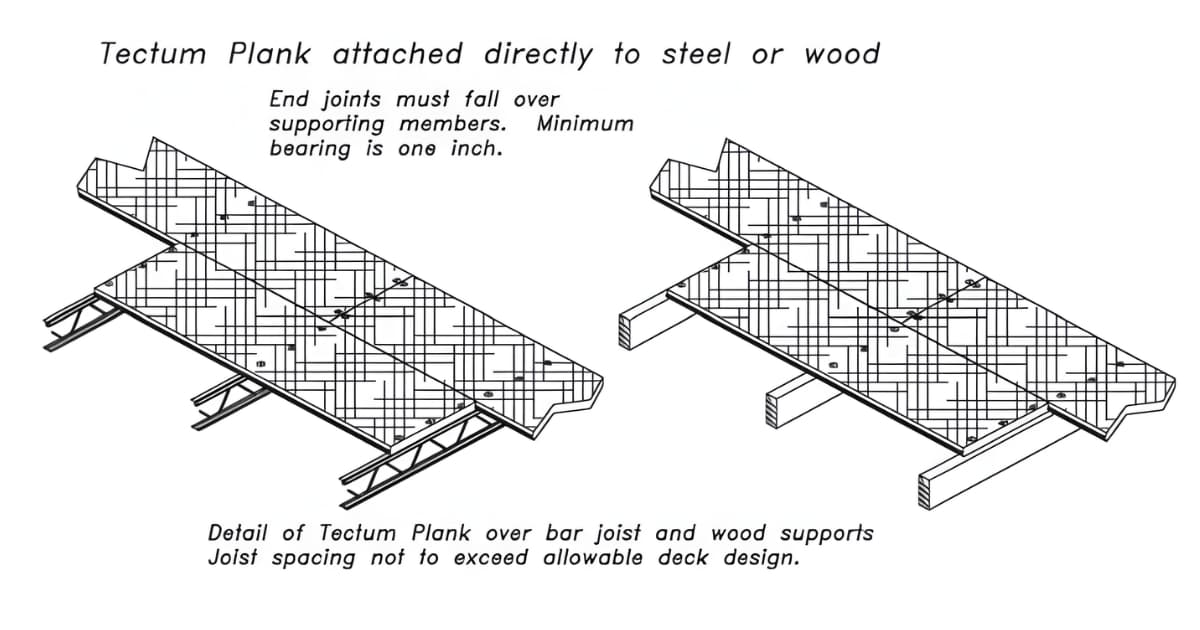
Tectum I Panels, including both Standard Plank and Long-Span Plank, are manufactured entirely from Tectum substrate and feature tongue-and-groove edges with square ends. When installing Tectum I Plank, each panel should be supported fully on structural members at both ends to ensure proper load transfer and structural performance. For applications that require increased spans, Tectum I Long-Span Plank incorporates a 16-gauge cold-rolled steel channel within the tongue-and-groove joint, allowing for extended spanning capabilities while maintaining structural integrity.
Screw Placement in Tectum I Planks
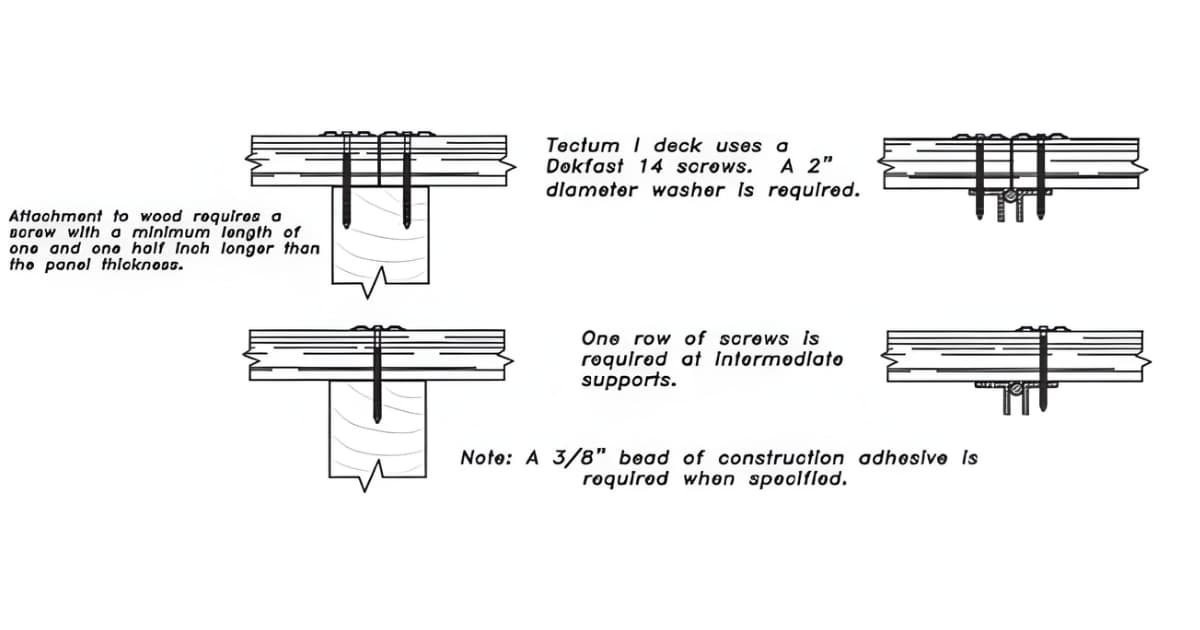
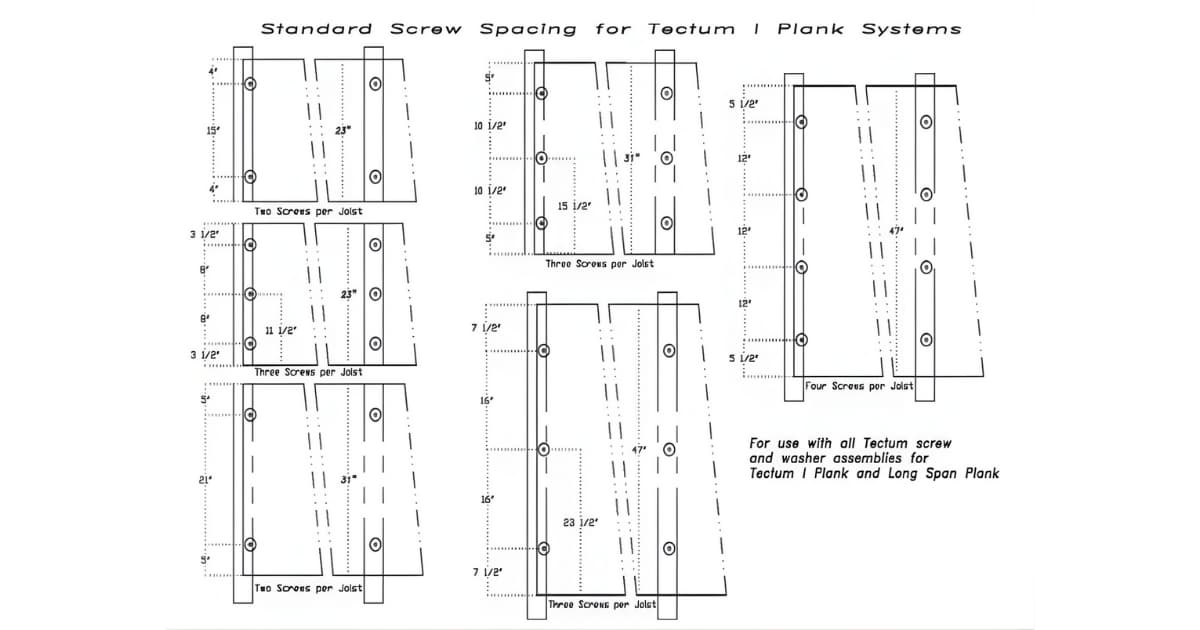
Screw fastener spacing for Tectum roof deck panels depends on the project’s specific wind uplift requirements and diaphragm shear design criteria. Panels need to be attached to the structural supports to match the approved contract documents, with a minimum of two screws per bearing typically required. Field fastener spacing is commonly shown at approximately 12 inches on center; however, actual spacing will be indicated in your project specifications, structural design requirements, and manufacturer-approved installation details.
Perimeter Fastening
Perimeter and edge conditions are subject to increased wind uplift and may require additional fastening. Fastener type, quantity, and spacing at the perimeters and the corners need to be installed in accordance with the approved contract documents, project-specific wind design criteria, and manufacturer installation requirements. Perimeter fastening requirements may differ from field conditions and can be verified before installation.
End Installation
Both Tectum I Standard Plank and Long-Span Plank panels are typically installed with staggered end joints and require construction adhesive application at the structural supports and along the tongue-and-groove joint. The combined use of adhesive, mechanical fasteners, and staggered end joints contributes to diaphragm performance, but your project’s final attachment requirements and diaphragm design needs to match your project-specific structural criteria, approved drawings, and manufacturer installation requirements.
Openings In Tectum I Roof Deck
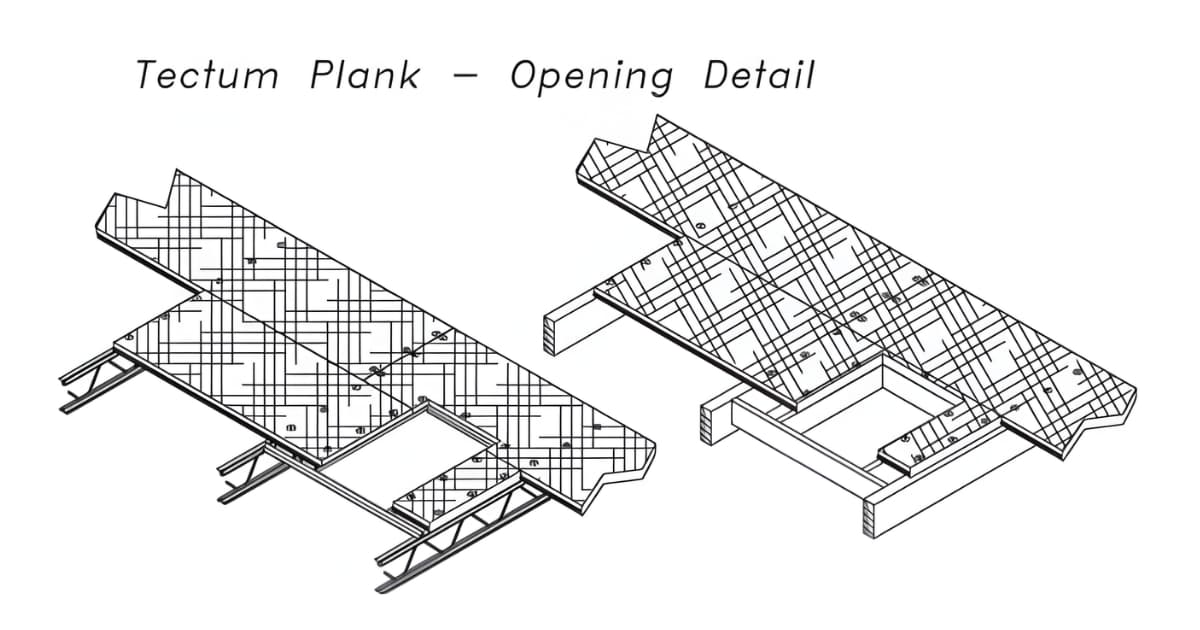
All openings in Tectum I plank roof deck that are larger than eight inches in any direction need to be framed. For Tectum I Long-Span Plank, any opening that is within four inches of the steel channel also need to be framed. The roof deck panels need to be mechanically fastened to the framing to match your project’s approved contract documents. Fastener spacing is governed by project-specific uplift and diaphragm shear requirements, with typical framing attachment shown at approximately 12 inches on center unless more restrictive criteria apply.
Transitions and Perimeter Support
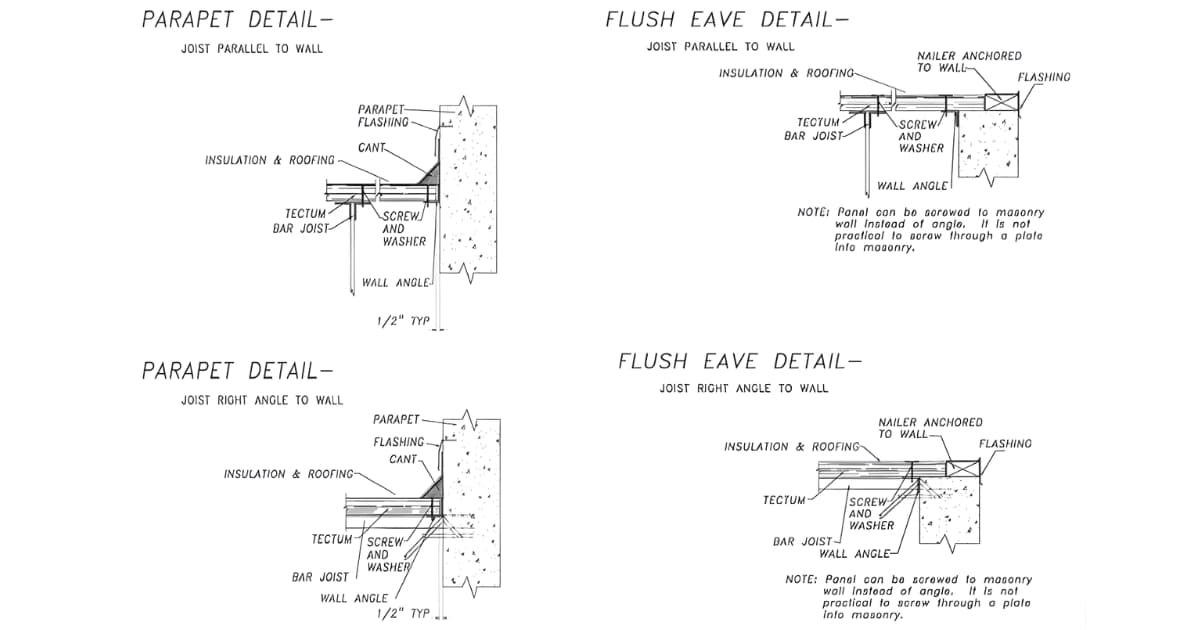
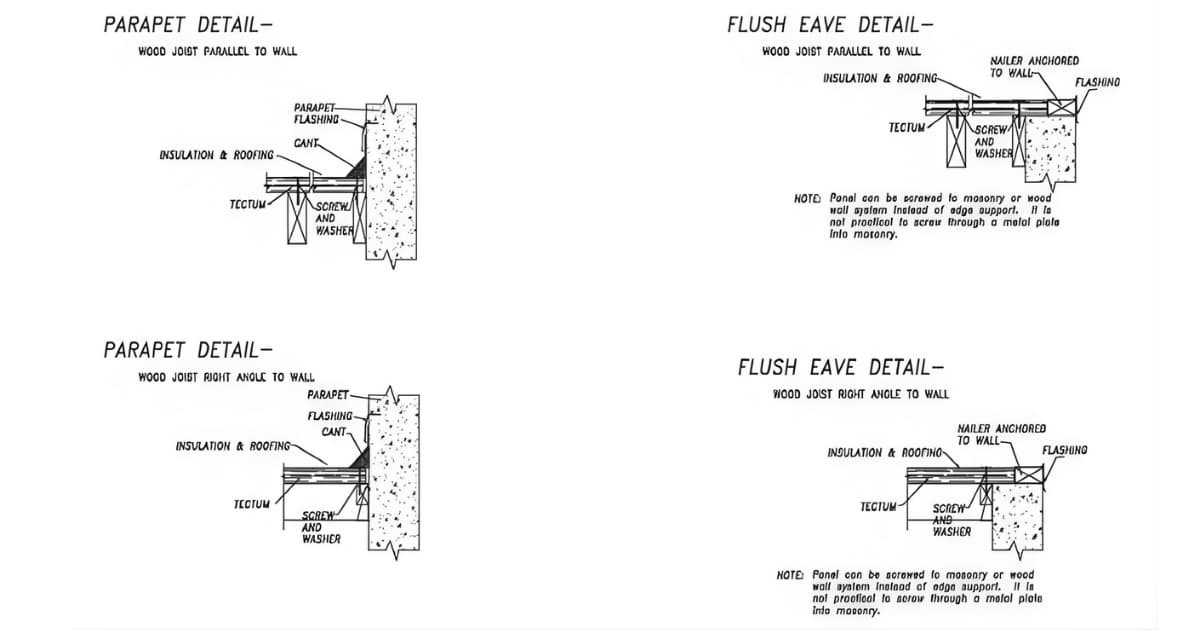
All perimeters and transition areas for Tectum I roof deck panels, including Long-Span Plank, must be fully supported. Typically, perimeter conditions are supported with a structural angle, while hips and valleys are commonly supported with a bent plate or equivalent structural support. Tongue and groove joints can be installed in change of slope areas as long as the transition does not exceed ½ inch in 12 inches in either direction. Where Tectum I panels are oriented perpendicular to a change in slope, continuous support is required to meet your project-specific structural requirements and approved installation details.